
PHILOSOPHY FROM THE OSTRICH, BY KỌ́LÁ ABÍMBỌ́LÁ
“Artistic expression” is often erroneously taken to mean individualist visual forms created by the skill and imagination of nameable and identifiable persons. Ostrich Ethics, however, is multifaceted: individualistic and communal; holistic and piecemeal; intellectual and emotional; oral and written; art for art’s sake as well as heuristics for living; and it is still very much an art form. Or rather, since there are various facets to the work, they are still very much art forms.
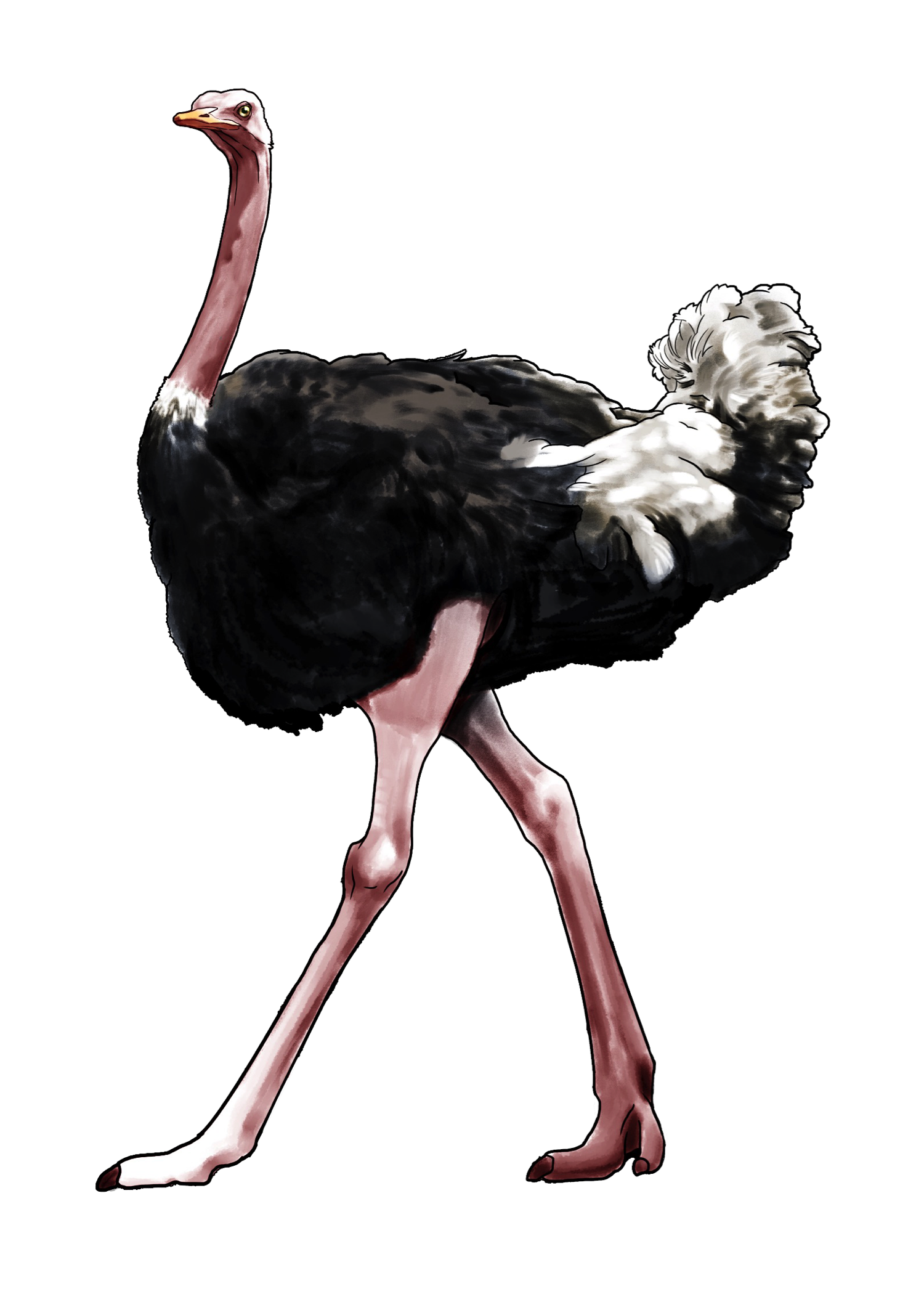
Artwork(s): Ostrich Ethics
- Painting by OrisaWorld Foundation (May 5, 2017) [above ]
- Odù Ifá poem by the Yorùbá of West Africa (date unknown) [below]
- Ifá Kíkí – An Òrìṣà Music performance by Kọ́lá Abímbọ́lá (May 5, 2017) [below]
- “Philosophy from the Ostrich,” by Kọ́lá Abímbọ́lá [above]
- “On Words and Things,” by Kọ́lá Abímbọ́lá [below]
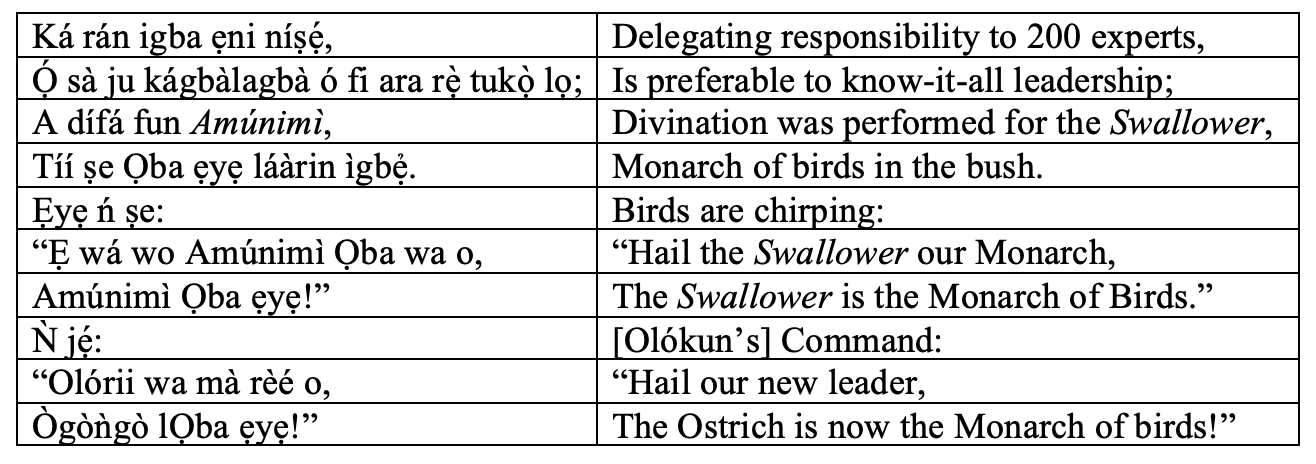
Ifá poem from the Odù Ọ̀ṣẹ́òlósùn
On Words and Things
- The painting Ostrich Ethics is a rendition of an elegant big bird. It is pleasing to the eye.
- Ostrich Ethics is also a poem from Odù Ifá, which is the sacred scripture of Òriṣà Religion. The denominations of Òrìṣà Religion include Ìṣẹ̀ṣe, Candomblé, Santería, Lukumi, Ṣàngó Baptists, and many others. There are about 500 million practitioners of Òrìṣà Religion all over the world.
- Ifá poems are used in Ifá divination as exemplars of ìwà (positive virtues to emulate and negative character traits to avoid).
- Odù Ifá has 256 Odù (“Books”), and each Odù has 800 poems, making a total of 204,800 poems. Each poem has eight parts: four are compulsory in that they must always be rendered exactly in Yorùbá word for word; the optional parts need not be included, and when rendered, they can be performed in various ways.
- I have captured the beauty of the compulsory parts of this poem in the written form above; and both compulsory and optional parts as Òrìṣà Music, which is a mixture of indigenous Yorùbá music with jazz, hip-hop, and funk—accompanied by percussion and vocal styles.
- Each poem is, therefore, an art form that can be appreciated primarily for its beauty or emotional power, secondarily for its philosophical heuristics for living, and tertiarily for its literary elegance. But then, perhaps heuristics is first, elegance second, and emotions third.
In 2005 UNESCO proclaimed the Ifá Divination System of West Africa as one of the sixteen Masterpieces of the Oral and Intangible Heritages of Humanity.
Philosopher: Kọ́lá Abímbọ́lá, Howard University and Ifá University
Leave a Reply